
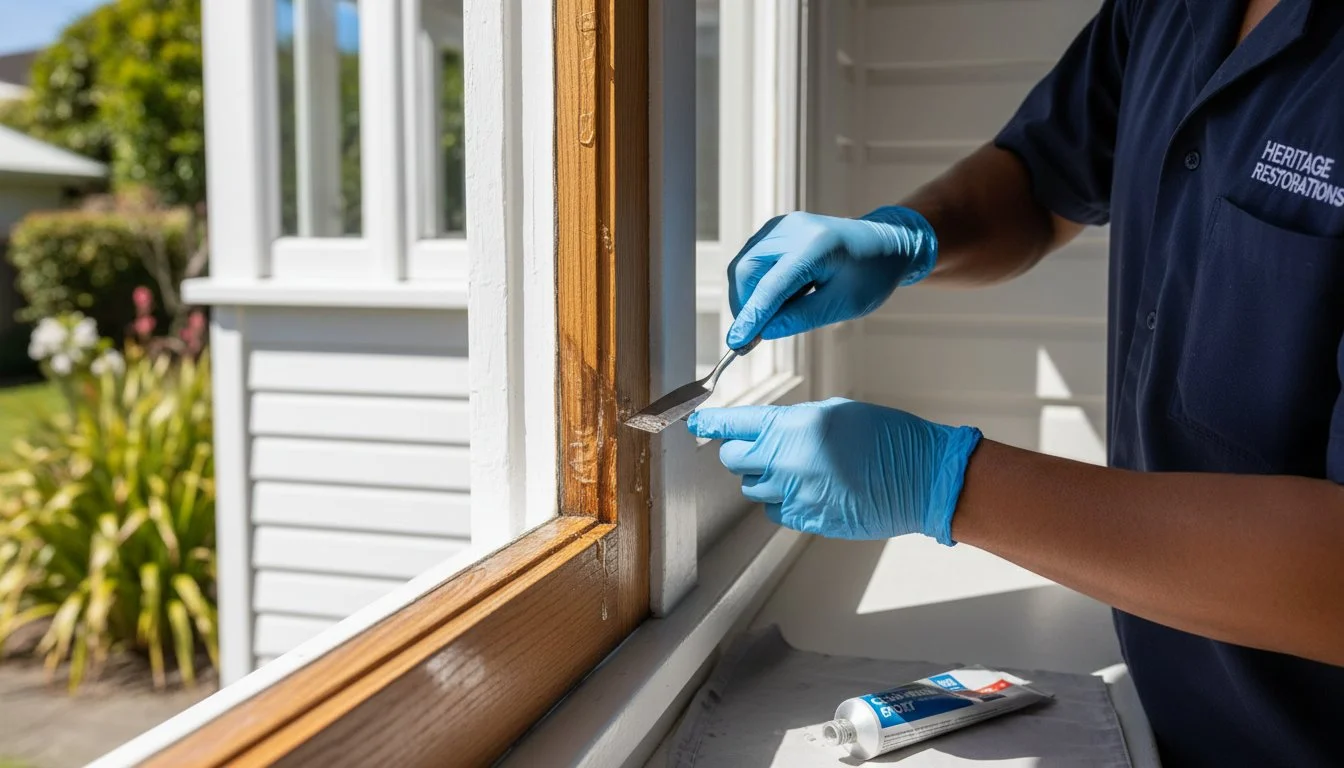
Expert Rot Repairs Auckland: Preserving Your Heritage Home’s Integrity

Expert Rot Repairs Auckland: Preserving Your Heritage Home’s Integrity

Last Tuesday, a Ponsonby homeowner discovered that a quick “patch and paint” fix from eighteen months ago had merely masked a fungal growth that had since compromised 35 percent of their original kauri window frame. It’s a heartbreaking scenario we see often across Auckland’s heritage suburbs, where the local humidity levels frequently exceed 80 percent. You shouldn’t have to choose between the high cost of full timber replacement and the recurring nightmare of poor quality rot repairs that fail after the first winter.

At Ashby Painting & Decorating Limited, we understand that your villa or bungalow is more than just a house; it’s a piece of history that deserves a permanent solution. We’ve developed a restoration process that ensures your home’s character remains intact while the structural integrity is fully restored. You’ll learn how to identify the early warning signs of decay and why professional resin treatments are the key to a seamless finish that stays invisible for years. This guide outlines the exact steps our team takes to deliver a hassle-free experience that leaves your home refreshed and your neighbors truly envious.

Key Takeaways

  • Understand why Auckland’s unique coastal humidity accelerates timber decay and how traditional native timbers like Kauri require specialized care to prevent structural failure.
  • Master the “Screwdriver Test” and identify key visual red flags to diagnose timber damage early, saving you from expensive, large-scale replacements.
  • Compare traditional carpentry with modern epoxy resin techniques to see how advanced restoration creates a durable, waterproof seal for your heritage home.
  • Learn how professional rot repairs safely address hidden fungal growth beneath old lead-based paint to protect both your family and your property’s value.
  • Discover the Ashby Painting advantage of punctual, hassle-free service that leaves your home refreshed and makes you the envy of your Auckland neighbourhood.

Understanding the Auckland Rot Cycle: Why Your Home is at Risk

Auckland’s unique geography creates a challenging environment for residential timber. The city’s narrow isthmus means almost every suburb is subject to high humidity and coastal salt spray, which are the primary catalysts for timber decay. Ashby Painting and Decorating frequently identifies that rot repairs are most common in homes where the exterior envelope has been neglected for more than five to seven years. When moisture penetrates the wood, it creates a perfect breeding ground for fungal spores that thrive in our temperate climate.

Many homeowners fall victim to the “Paint Trap” effect. This occurs when a thick layer of modern acrylic paint remains flexible on the surface while the timber underneath has begun to soften. The paint hides the damage, acting as a waterproof skin that actually seals moisture inside the wood. By the time the paint bubbles or cracks, the underlying structure is often severely compromised. Our efficient team of painters focuses on identifying these soft spots early, specifically around window sills, fascia boards, and weatherboard laps, where water tends to pool and sit.

The Impact of Auckland’s Subtropical Climate

The North Shore’s proximity to the Hauraki Gulf introduces salt air into the local ecosystem, which accelerates the expansion and contraction cycles of exterior timber. This constant movement creates microscopic fissures in the paint film. In West Auckland, where annual rainfall often exceeds 1,200mm, the saturation levels of exterior cladding are significantly higher than in drier regions like Canterbury. Rot fungi remain dormant in winter only to explode in growth during humid Auckland springs. This rapid biological activity can turn a small soft spot into a structural emergency within a single season, making regular maintenance a non-negotiable task for preserving property value.

Common Timber Species in Auckland Heritage Homes

Auckland’s villa and bungalow stock relies heavily on old-growth NZ natives like Kauri and Rimu. These timbers are incredibly dense and resinous, yet they react differently to modern moisture levels than contemporary H3.2 treated pine. Understanding Dry Rot and its counterpart, wet rot, is essential for any heritage restoration project. Dry rot can spread through masonry and behind plaster, while wet rot stays localized to the moisture source.

Ashby Painting and Decorating utilizes specialist repair resins because modern “off-the-shelf” fillers lack the flexibility required for old-growth timber. Standard fillers often shrink or crack within 12 months because they don’t bond effectively with the natural oils found in Kauri. Our methodical approach to rot repairs ensures that the structural integrity of your heritage home is restored. We deliver a finish that makes neighbours envious while providing the long-term protection your investment deserves.

Is it Rot? How to Diagnose Damage Before It Spreads

Catching timber decay early is the difference between a simple patch and a full-scale structural overhaul. At Ashby Painting and Decorating, we recommend the screwdriver test as your first line of defense. Press a flat-head screwdriver into any suspect timber; if the metal sinks more than 3mm into the wood with minimal pressure, the internal fibers have failed. This loss of density indicates that rot repairs are no longer optional but urgent. Visual red flags often appear as bubbling paint or dark, tea-coloured staining that bleeds through the finish. If you spot mushroom-like fungal growth, the moisture content has likely exceeded 20% for an extended period, creating a breeding ground for decay.

Auckland homes often hide damage behind a facade of fresh paint. When you press on your weatherboards, they should feel rigid. If they feel springy or bounce under your touch, the rot has likely moved past the surface and compromised the internal framing. Distinguishing between surface-level weathering, which looks like grey, silvered wood, and deep-seated structural decay is vital. Surface weathering is often aesthetic, but structural rot turns timber into a soft, spongy mass that cannot support the weight of your home. Our team ensures that every surface is properly vetted before a single drop of paint is applied, maintaining the high-end results our clients expect.

The 5 Warning Signs Every Auckland Homeowner Should Know

  • Paint discolouration that persists even after dry weather, suggesting water is trapped deep within the timber.
  • Difficulty opening or closing wooden window sashes due to swelling, a sign that the wood is absorbing excess moisture.
  • A musty, earthy smell near exterior walls or underfloor vents, which often precedes visible mould.
  • Cracked or flaking paint around joints where water can easily penetrate.
  • Soft spots in timber window sills or door frames that feel damp to the touch.

Professional Assessment vs. DIY Guesswork

Our efficient team of painters uses advanced tools like thermal imaging and moisture meters to find what the naked eye misses. These devices detect temperature variances that indicate water pockets behind your cladding. For owners of heritage Auckland villas, ignoring these signs leads to secondary issues like borer infestations and toxic mould. We frequently encounter incipient decay, which is the stage where rot is invisible but the timber strength is already failing by up to 50%. Proper preparation often involves adhering to Lead Paint Safety Regulations when stripping back old layers to reach the healthy wood underneath. Ashby Painting and Decorating ensures your home remains the pride of the street, making your neighbours envious of your pristine, rot-free exterior. If you suspect your timber is failing, a quick check from a professional can save you thousands. You can request a detailed assessment to ensure your home stays structurally sound and beautifully finished.

Expert Rot Repairs Auckland: Preserving Your Heritage Home’s Integrity

Modern Rot Repair Techniques: Restoration vs. Replacement

Many homeowners assume that seeing decayed timber means a full board replacement is the only solution. Traditional “cut and replace” carpentry often leads to higher labour costs and can strip away the original character of an Auckland villa. Ashby Painting utilizes advanced epoxy resin restoration as a superior alternative for most rot repairs. This method isn’t just a patch; it’s a structural bond. While a full timber replacement can easily cost 3x more than a restoration once you factor in custom milling and specialized labour, resin restoration often achieves the same result for a fraction of that price. Our efficient team of painters applies these resins to bond directly to the wood fibers, creating a waterproof seal that remains flexible enough to move with the timber.

Ashby Painting uses specialised resins specifically designed to mimic the natural movement of New Zealand timber. This is vital because wood is a living material that reacts to our local climate. By choosing restoration over replacement, we preserve the dense, old-growth timber found in heritage homes, which is often more durable than modern, fast-grown alternatives. This approach ensures a high-end aesthetic result that will make your neighbours envious while maintaining the structural integrity of your property.

The Science of Resin-Based Timber Repair

The process begins with liquid wood stabilisers. These specialized liquids penetrate deep into the softened timber to kill active fungi and consolidate the remaining fibers. We choose epoxy resins over common polyester fillers because they offer far better durability in the high-humidity Auckland climate. Polyester fillers are rigid and often pop out after a single season. In contrast, our epoxy solutions maintain high elasticity. This prevents cracking when the wood expands in summer and contracts in winter, ensuring your home stays protected for years to come.

When Replacement is the Only Option

There is a point where the timber is too far gone. If the rot has compromised the structural safety of a load-bearing beam or a floor joist, replacement is mandatory. When structural damage is too severe, the focus of rot repairs shifts from restoration to precision replacement. Ashby Painting identifies these “Points of No Return” early to keep your project on schedule. When we do replace timber, we source matching profiles for weatherboards and joinery to maintain the specific aesthetics of your home.

  • We identify structural failures that require a licenced builder’s intervention.
  • New timber is sourced to match the exact dimensions of 100-year-old profiles.
  • Our team ensures every piece of new wood is properly primed and sealed on all six sides before it’s installed.

This final step is critical to prevent “New Wood Rot,” a common issue where moisture enters the back of unsealed timber and causes decay within 24 months. By combining modern resin technology with traditional replacement methods where necessary, we provide a comprehensive solution that prioritizes both your budget and your home’s longevity.

Auckland’s heritage bungalows often hide a destructive secret beneath their charming facades. Many of these pre-1970 homes carry up to 12 layers of old paint, with the bottom-most coatings almost certainly containing lead. When moisture penetrates these brittle layers, it creates a damp microclimate that accelerates timber decay. Our efficient team of painters frequently discovers that what looks like a minor surface crack is actually a symptom of deep-seated rot. Because lead paint is so thick and rigid, it can mask the softening of the wood underneath until the structural integrity of the weatherboard is compromised.

Attempting rot repairs by simply sanding back the affected area is a significant health and safety risk. This outdated method releases a toxic cocktail of lead dust and fungal spores into the air, potentially contaminating your garden and home interior. Ashby Painting and Decorating prioritises a safe, methodical approach to ensure your family’s safety while providing a foundation for a high-end finish that makes neighbours envious. By removing the lead safely, we eliminate the hazard and the rot in one coordinated effort.

Why Safe Stripping is the First Step to a Permanent Fix

The Ashby process focuses on containment and precision. We prefer lead paint stripping using specialized chemical peelers or controlled heat-based removal, which keeps the waste in a manageable state and prevents dust drift. This exposes the raw timber, allowing us to see the full extent of the damage. Without this clarity, you’re merely guessing at the repair’s scope. “You cannot permanently fix rot through six layers of failing lead paint; you must reach the raw timber to seal it properly.” Stripping back to the wood allows our high-performance resins to bond directly with the healthy fibers, creating a structural bond that lasts for decades rather than months.

Sealing the Deal: Premium Painting After Repair

Once the timber is sound, the final protective layers determine the project’s longevity. Auckland experiences high UV levels and an average of 1,200mm of rainfall annually, which puts immense stress on exterior surfaces. We use premium, high-build primers designed to penetrate the wood grain and lock out moisture. Following the rot repairs, a full exterior house painting system provides the ultimate barrier. Our team selects paint systems with superior flexibility to accommodate the natural expansion and contraction of Auckland’s native timbers. This disciplined approach ensures your home remains refreshed and protected against the elements for the long term.

If your villa shows signs of bubbling paint or soft wood, don’t wait for the damage to spread. Contact Ashby Painting and Decorating today for a detailed assessment of your property.

Choosing an Auckland Rot Repair Specialist: The Ashby Advantage

Ashby Painting and Decorating believes that home maintenance shouldn’t disrupt your lifestyle. We prioritize punctuality because we respect your schedule and your property. Our team manages every technical detail of rot repairs, starting with essential lead testing for older Auckland timber and finishing with a precise decorative flourish. This comprehensive management ensures a hassle-free experience that protects your investment while removing the stress of coordinating multiple contractors.

A professional repair and paint job does more than just stop decay; it creates what we call “Neighbour Envy.” When a home is restored to its original glory with high-end aesthetic results, it naturally increases property value and street appeal. We balance a rigorous blue-collar work ethic with a focus on premium finishes, ensuring your home is imbibed with a sense of quality and positivity. Our commitment to Auckland homeowners is built on on-time delivery and detailed, transparent quotes that leave no room for ambiguity.

Auckland-Wide Expertise from Ponsonby to the North Shore

Since 2015, our efficient team of painters has successfully transformed over 2,500 Auckland properties. This extensive history gives us a deep understanding of local council requirements and the specific heritage preservation guidelines necessary for Ponsonby villas or North Shore coastal homes. We recognize that major repairs can be intrusive, so we structure our workflow to minimize disruption to your daily life. Our disciplined approach means we keep a tidy site and adhere to strict timelines, ensuring your project stays on track from the first day to the final inspection.

Get Your Hassle-Free Rot Repair Quote Today

The journey to a restored home begins with our thorough site visit and requirement gathering session. We don’t just glance at the damage; we assess the underlying causes to ensure our rot repairs provide a permanent solution. Our “No Surprises” pricing model for maintenance and repairs ensures that the figure on your quote is the figure you pay. This transparency allows you to plan your home improvements with total confidence.

  • Initial Assessment: Detailed inspection of timber integrity and moisture levels.
  • Transparent Pricing: Fixed-price quotes with no hidden administrative fees.
  • Reliable Scheduling: Guaranteed start dates and efficient project completion.

Don’t let timber decay compromise your home’s structural integrity or its beauty. Contact Ashby Painting and Decorating today to receive your detailed quote. Let us refresh your property, secure your investment, and make the neighbours envious with a finish that lasts for years to face the Auckland elements.

Restore the Timeless Character of Your Auckland Villa

Auckland’s damp climate demands a proactive approach to timber maintenance to prevent structural decay from compromising your investment. By identifying moisture damage early and integrating professional lead paint stripping, you ensure your heritage villa remains a source of pride rather than a liability. Ashby Painting and Decorating has transformed thousands of Auckland homes since 2015, specializing in the delicate restoration of heritage villas and bungalows. Our efficient team understands the unique requirements of historic timber and provides a seamless service that often makes the neighbours envious of the final finish.

Choosing a specialist who handles both lead removal and rot repairs ensures a durable foundation for your next painting project. We pride ourselves on punctuality and a disciplined work ethic, delivering a hassle-free experience that respects your time and property. It’s essential to protect your home with a restoration that is imbibed with positivity and high-end craftsmanship. Take the first step toward a refreshed exterior by securing a professional assessment from our reliable local experts today.

Get an Instant Free Quote for Your Auckland Rot Repairs

Frequently Asked Questions

How much do rot repairs cost for an Auckland villa?

Rot repairs for an Auckland villa typically range from NZ$500 for minor decorative sill work to over NZ$10,000 for extensive structural timber replacement. Ashby Painting and Decorating provides a detailed assessment during the initial site visit to offer a fixed quote based on the specific damage found. This structured approach ensures your project stays on budget while we restore your home’s character to a level that makes your neighbours envious.

Can I just paint over rotten wood if I use a good primer?

You shouldn’t paint over rotten wood because paint doesn’t stop the fungal growth occurring beneath the surface. Applying primer to decaying timber is a temporary fix that usually fails within 6 to 12 months as the wood continues to crumble. Our efficient team of painters prioritises thorough prep work, removing all soft fibres before applying specialized consolidants to ensure a refreshed and durable finish.

How long does a professional resin rot repair last?

A professional resin rot repair can last 15 to 20 years when executed with high-quality epoxy systems and correct sealing techniques. Ashby Painting and Decorating uses a disciplined approach involving premium resins that bond with the healthy timber to create a moisture-proof barrier. This methodical process ensures your windows and doors remain transformed and functional for decades rather than just a few seasons.

Is timber rot a structural issue or just cosmetic?

Timber rot often begins as a cosmetic blemish but quickly evolves into a serious structural issue if moisture reaches the internal framing. The 2023 BRANZ House Condition Survey indicates that untreated moisture ingress is a primary cause of structural failure in New Zealand homes. Our specialized knowledge allows us to identify whether a repair is a simple surface fix or requires more intensive intervention to maintain the integrity of your property.

Do I need a building consent for rot repairs in Auckland?

Most rot repairs in Auckland don’t require building consent if you’re performing “like-for-like” maintenance under Schedule 1 of the Building Act 2004. However, you must consult Auckland Council if the decay affects structural boundary joists or requires significant structural alterations. Ashby Painting and Decorating ensures all work complies with local standards, providing a hassle-free experience that protects your investment and your legal standing.

Can rot spread from one window to the rest of the house?

Rot spreads through microscopic fungal spores and can migrate across timber surfaces if moisture levels consistently exceed 20 percent. While the rot doesn’t “crawl” like an insect, the environmental conditions that caused it often affect entire elevations of a house. Addressing these rot repairs early prevents a single window problem from becoming a total exterior overhaul, keeping your home looking its best and maintaining its value.

What is the best time of year to fix timber rot in Auckland?

The best time for rot repairs in Auckland is between November and March when the weather is consistently dry and humidity is lower. Our team schedules these technical projects during the summer months to ensure timber moisture content is below the required 15 percent threshold for optimal resin adhesion. This punctuality in project timing ensures a high-end result that stands up to the harsh New Zealand sun and prevents future decay.

Is lead paint always present in houses that have rot?

Lead paint is found in approximately 50 percent of New Zealand homes built before 1970, which are the same properties most prone to timber decay. Ashby Painting and Decorating maintains specialized knowledge in lead paint removal to keep your family safe during the repair process. We treat every old villa with the respect it deserves, ensuring the removal of hazardous materials is handled with professional care and a commitment to safety.

Professional Lead Paint Stripping Auckland: Safe Removal & Villa Restoration

Professional Lead Paint Stripping Auckland: Safe Removal & Villa Restoration

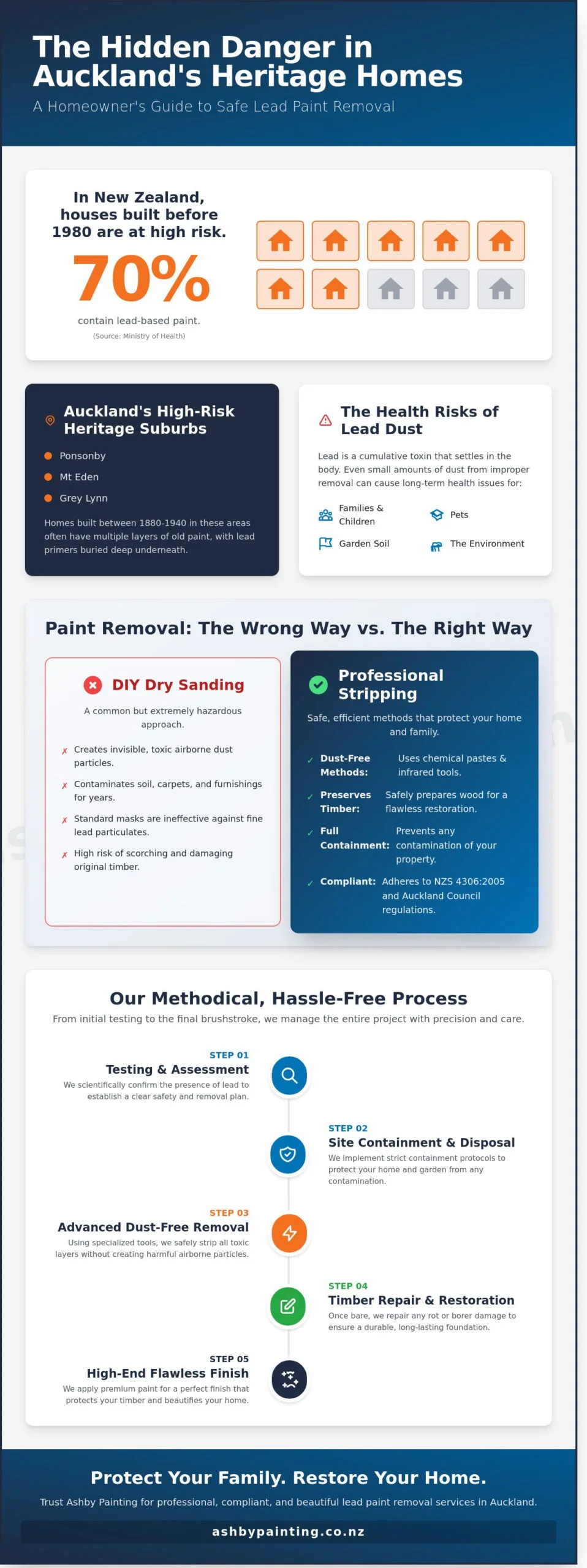
Did you know that according to the Ministry of Health, roughly 70% of New Zealand houses built before 1980 contain lead-based paint? For many Auckland homeowners, discovering this during a renovation can turn a project of pride into a source of genuine anxiety. You likely want to restore the intricate kauri details of your heritage villa, yet the fear of lead dust contaminating your garden soil or living spaces is a heavy burden. Our efficient team of painters understands that you need more than just a fresh look; you need the peace of mind that comes with professional lead paint stripping and strict adherence to NZS 4306:2005 standards.

Ashby Painting & Decorating Limited provides this guide to show you the safest, most effective methods for removing toxins while perfectly preserving your home’s original timber. We promise a transformed property that’s fully compliant with Auckland Council health regulations and ready for a high-end finish. We’ll detail our methodical, hassle-free approach to site containment and disposal, ensuring your home is refreshed with a sense of positivity and a result that makes your neighbours envious. From initial testing to the final brushstroke, discover how we respect your time and your family’s safety through disciplined craftsmanship and technical expertise.

Key Takeaways

  • Understand why Auckland villas in heritage suburbs like Ponsonby and Mt Eden are high-risk zones for lead-based paint applied before the 1979 ban.
  • Discover how professional lead paint stripping prevents the spread of toxic airborne particles and soil contamination caused by traditional mechanical sanding.
  • Learn about advanced, dust-free removal methods like chemical pastes and infrared tools that safely prepare your timber for a flawless restoration.
  • Identify the essential steps for repairing rot and borer damage once the bare wood is exposed to ensure a durable, high-end finish.
  • Find out how Ashby Painting manages the entire hassle-free process to transform your property and leave your neighbours envious of the results.

The Reality of Lead Paint in Auckland Heritage Homes

Auckland’s architectural identity is defined by the ornate villas and bungalows of suburbs like Ponsonby, Mt Eden, and Grey Lynn. These homes, many constructed between 1880 and 1940, represent a significant era of New Zealand craftsmanship. However, they also carry a hidden health risk. Before the New Zealand government officially banned lead-based decorative paints in 1979, these products were the industry standard due to their durability. By examining the global history of lead paint, we can see that while lead offered superior weather resistance, its neurological impact on families and pets is severe.

Ashby Painting and Decorating frequently encounters lead-based primers on older weatherboards and sash windows. You can often identify these hazardous layers by a distinctive “alligatoring” pattern, where the paint cracks into small, rectangular scales. For Auckland families, the implications are legal as well as medical. Lead is a cumulative toxin that settles in the blood, bones, and soft tissues. Because it doesn’t leave the body easily, even small amounts of dust from a botched DIY job can lead to long-term health issues. Our efficient team of painters prioritizes safety to ensure your home remains a sanctuary rather than a hazard.

Why Pre-1970s Auckland Houses Require Special Care

Auckland’s humid maritime climate is particularly harsh on heritage timber. In high-moisture areas, old oil-type binders become brittle and lose their adhesion. We often find that a single Mt Eden villa has 10 or more layers of paint, with the original white lead primers buried deep beneath modern acrylics. When these layers degrade, they release toxic flakes into the garden soil. This makes professional lead paint stripping essential, as standard sanding would release dangerous particulates into the air, affecting both your household and the surrounding environment.

Testing for Lead: The First Step in Your Restoration

Restoring a heritage property should always begin with a scientific assessment. While DIY lead test kits are available at hardware stores, they require you to cut through every layer of paint to reach the base primer to be effective. If your home dates back to the early 20th century, there is a 90% statistical likelihood that lead is present. Simply painting over the issue is rarely a permanent solution in New Zealand’s damp conditions, as the weight of new coats can pull the old, brittle lead paint away from the timber. Ashby Painting and Decorating provides a hassle-free testing process that establishes a clear safety plan. We focus on delivering high-end aesthetic results that make neighbours envious while ensuring your restoration project is built on a non-toxic foundation.

Why Professional Lead Paint Stripping Beats Traditional Sanding

Restoring an Auckland villa requires more than just elbow grease; it demands a clinical approach to safety. While many homeowners reach for a power sander to strip old layers, this mechanical action creates a significant health hazard. Our efficient team of painters understands that lead paint stripping is the only responsible way to handle pre-1970s coatings. Mechanical sanding pulverises lead into invisible, toxic airborne particles that bypass standard cleaning methods. These particles don’t just stay on the wall. They drift into Auckland gardens, contaminating the soil where children play and vegetables grow.

Ashby Painting and Decorating utilizes advanced chemical and infrared removal systems to prevent this dust danger. These professional tools are far more efficient than the DIY heat guns and scrapers found in local hardware stores. By choosing a professional approach, you ensure your home’s transformation is imbibed with positivity rather than the stress of environmental contamination. We take pride in delivering a finish that makes neighbours envious while keeping your family safe. Our methodical process ensures that your heritage features are preserved without the risk of scorching the timber or releasing toxic fumes.

The Dangers of Dry Sanding Lead Paint

Dry sanding is particularly dangerous because lead dust is incredibly resilient. It settles deep into carpets, curtains, and soft furnishings, remaining a risk for years after the job is finished. Standard hardware store masks are inadequate because they don’t provide a tight seal or the correct filtration for fine particulates. To remain safe, you must use extraction equipment capable of capturing particles as small as 0.3 microns, which is the specific threshold that necessitates HEPA-rated extraction according to the Ministry of Health lead paint guidelines.

Site Containment and Safety Protocols

The Ashby team implements rigorous site containment to provide a hassle-free experience for every client. We use heavy-duty plastic sheeting to seal off work zones and employ industrial HEPA vacuums for constant extraction. Our safety protocols include:

  • PPE Requirements: Our painters wear full-body Tyvek suits and P3 rated respirators at all times to prevent personal exposure.
  • Daily Cleanup: We perform a comprehensive cleanup at the end of every workday to maintain a tidy and safe site.
  • Safe Disposal: All lead-contaminated waste is double-bagged and disposed of at authorized facilities following Auckland Council guidelines.

By managing these logistical complexities, we allow you to focus on the high-end aesthetic results of your renovation. If you’re ready to refresh your heritage home safely, consider how our professional lead paint services can protect your investment and your health.

Professional Lead Paint Stripping Auckland: Safe Removal & Villa Restoration

Professional Lead Paint Stripping Methods for NZ Villas

Ashby Painting and Decorating approaches heritage restoration with a methodical precision that protects both the history of the property and the health of its occupants. Selecting the correct lead paint stripping technique is essential for preserving the delicate grains of Kauri and Rimu found in New Zealand villas. Our efficient team of painters selects removal methods based on the specific architectural elements and the number of coatings accumulated over the decades. By utilizing these professional systems, we ensure a refreshed exterior that makes neighbours envious while adhering to the strict safety standards set by WorkSafe New Zealand.

Chemical Stripping: Deep Removal for 30+ Layers

Ashby Painting and Decorating utilizes advanced chemical poultices, such as Peel Away, to manage projects where decades of maintenance have created a thick “skin” of lead-based paint. These alkaline or solvent-based pastes are applied to the surface and covered with a fibrous blanket, which allows the chemicals to stay active and “pull” lead particles out of the wood grain. This method is particularly effective for the intricate fretwork and decorative mouldings common in 1910s villas, as it reaches into crevices that mechanical tools cannot access. Once the blanket is removed, our team meticulously neutralises the timber to restore its pH balance. Failing to neutralise the wood can cause new coatings to fail within 12 months, so we treat this step with absolute discipline.

Infrared and Controlled Heat Removal

Our team employs specialized infrared technology for large-scale exterior weatherboard projects. Traditional blowtorches are dangerous because they exceed 500 degrees Celsius, which is the point where lead begins to vaporise into toxic fumes. Infrared tools operate at approximately 400 degrees Celsius, softening the paint until it reaches a “leather-like” state without reaching the vapour point. This allows for the clean removal of paint in long strips, significantly reducing the risk of fire and airborne contamination. This method is exceptionally efficient for flat surfaces, allowing us to complete projects on time while maintaining a tidy site. The resulting finish is a smooth, bare timber surface that is ready for a high-end aesthetic transformation.

Ashby Painting and Decorating also incorporates wet scraping techniques to manage smaller, localized areas of peeling paint. By keeping the surface damp with a fine mist, we prevent lead dust from becoming friable and entering the air or soil. Every project we undertake is imbibed with a sense of positivity and professionalism, ensuring that the transition from a lead-contaminated site to a beautiful, safe home is entirely hassle-free for the homeowner. Whether your villa is a modest cottage or a grand heritage estate, our structured approach guarantees a result that balances technical safety with premium craftsmanship.

The Restoration Journey: From Bare Timber to a Perfect Finish

The moment the final layers of old pigment are removed marks a turning point for any heritage villa. Stripping the surface reveals the raw history of the building, but it also exposes the reality of decades spent battling the elements. Our efficient team of painters understands that lead paint stripping is just the beginning of a meticulous restoration process. Once the timber is bare, we can accurately assess the health of the substrate, identifying issues that were previously hidden under thick, cracked layers of lead-based coatings.

Integrating Rot Repairs and Plastering

Stripping the wood is the only time a homeowner can truly see the structural health of their window sills and weatherboards. It’s common to find that approximately 40 percent of Auckland heritage homes require some level of rot repairs or borer treatment once the timber is exposed. Our team prioritises these repairs immediately to ensure the structural integrity of the home remains intact before any new product is applied. After addressing timber health, we focus on safety and precision. We perform fine sanding using HEPA-filtered equipment to smooth the grain without releasing any residual dust. This creates a stable, clean surface that allows high-end plastering and fillers to bond correctly, resulting in a finish that looks like new timber rather than patched-up heritage wood.

Painting Your Stripped Villa for Auckland Conditions

Auckland presents unique challenges for exterior coatings. Homes in West Auckland face high humidity levels, often averaging 80 percent year-round, while North Shore properties must withstand constant salt spray. Ashby Painting and Decorating selects premium, high-durability primers specifically engineered for these NZ conditions. We don’t just apply paint; we build a protective barrier that prevents moisture ingress and UV degradation. Our disciplined approach to the “neighbours envious” look involves a multi-stage coating system:

  • Deep-penetrating primers: These soak into the thirsty heritage timber to provide a solid foundation.
  • Flexible mid-coats: These allow the wood to expand and contract during Auckland’s rapid temperature shifts.
  • Premium top-coats: These provide the high-end aesthetic and dirt-resistance needed for a lasting finish.

Ashby Painting and Decorating maintains a strict focus on punctuality and clear communication throughout this phase. We respect your time by arriving when promised and delivering a hassle-free experience that transforms your property into the pride of the street. This professional finish protects your investment for decades, ensuring the heritage character of your home is preserved with modern reliability. If you want a finish that makes the rest of the street take notice, contact our expert team today for a detailed quote.

Trusting Ashby Painting for Your Auckland Lead Removal Project

Ashby Painting and Decorating operates as the Reliable Local Expert for Auckland homeowners who value both safety and style. Our team understands that heritage restoration isn’t just about applying a fresh coat of paint; it’s about the meticulous management of hazardous materials. We’ve transformed over 2,500 homes across the region, ensuring that every project meets New Zealand’s strict health and safety regulations regarding lead containment. We take the stress out of lead paint stripping by handling the technical complexities while you focus on the vision for your property. By choosing an established operation, you’re investing in a team that views punctuality as a form of respect for your time and your family’s routine.

Our team manages the entire process to ensure it’s completely hassle-free. From the moment we provide your initial quote to the final site cleanup, we maintain a disciplined environment. We don’t leave messes behind. We don’t disappear mid-project. This professional reliability is why Auckland residents trust us with their most valuable assets. We believe a painting project should be a positive experience that adds value to your life and your investment.

Our Proven Process for Lead Paint Stripping

We start every project with detailed requirement gathering to ensure our team understands the specific architectural nuances of your villa or bungalow. Ashby Painting provides instant free quotes that offer transparency and clarity before any work begins. Our “on-time” promise ensures that we arrive when we say we will, keeping your restoration on schedule. Our efficient team of painters balances a gritty, blue-collar work ethic with a refined eye for high-end aesthetic results, ensuring your home is both structurally sound and visually stunning. This balance is essential for lead paint stripping, where technical precision must meet a flawless finish. From the first scrape of old paint to the final brushstroke, we maintain a tidy workspace that protects your garden, your pets, and your neighbors.

Ready to Restore Your Heritage Home?

Selecting Ashby Painting reduces your project risk because we bring decades of combined experience in lead containment and disposal to every job site. We don’t just remove a hazard; we imbibe your home with a sense of positivity and renewed life. Professional containment is the only way to ensure lead dust doesn’t migrate into your soil or soft furnishings. Once the stripping is complete, we apply premium finishes that make your home the standout property on the street. We take pride in creating results that make neighbors envious, turning a necessary safety upgrade into a significant aesthetic triumph. You can rest easy knowing the job’s done right the first time.

Secure Your Heritage Home’s Future Today

Restoring an Auckland heritage home is a significant investment that requires a balance of safety and high-end craftsmanship. Choosing professional lead paint stripping over traditional sanding methods is the only way to ensure toxic materials are removed without contaminating your living environment. Ashby Painting and Decorating has been transforming Auckland homes since 2015, establishing a reputation as specialists in the delicate restoration of Heritage Villas and Bungalows. Our disciplined, punctual team of professional painters understands the importance of your time and the value of your property. We’ve refreshed thousands of houses across the region, consistently delivering results that make neighbours envious. By focusing on a methodical, hassle-free process, we reveal the pristine timber beneath old layers, providing a perfect foundation for a premium finish. Our efficient team arrives on time and works with a sense of pride to ensure your project is imbibed with positivity from start to finish. Let us take the stress out of your renovation while you enjoy the beautiful transformation of your home.

Get a Hassle-Free Lead Stripping Quote from Ashby Painting

Frequently Asked Questions

Is lead paint stripping expensive in Auckland?

Lead paint stripping in Auckland involves higher costs than standard repainting because of the specialized safety protocols required by WorkSafe NZ. While we don’t provide flat rates, homeowners should budget for the extra labor involved in site containment and HEPA filtration. Our efficient team of painters ensures the project stays within the agreed timeline to minimize costs. This investment protects your family’s health and increases the long-term value of your heritage villa.

Can I stay in my house while lead paint is being stripped?

You can typically remain in your home if the lead paint stripping is restricted to the exterior weatherboards. Ashby Painting and Decorating sets up strict containment zones to prevent toxic dust from entering your living spaces. If we’re stripping interior surfaces, you’ll need to vacate those specific rooms until the HEPA vacuuming is complete. We prioritize your family’s safety by following the Health and Safety at Work Act 2015 guidelines throughout the process.

How do I know if the paint on my Auckland villa contains lead?

You can confirm the presence of lead by using a 3M LeadCheck swab or sending a flake sample to an IANZ accredited laboratory. Statistics from the Ministry of Health show that 90% of New Zealand houses built before 1945 contain high lead concentrations. Our team uses these professional testing methods before starting any heritage project. This ensures we apply the correct safety measures to your home from day one.

What is the safest method for removing lead paint from weatherboards?

The safest method for lead paint stripping is using chemical peel-away systems or wet sanding with HEPA-integrated power tools. These techniques prevent toxic dust from becoming airborne and contaminating your property. Ashby Painting and Decorating avoids high-heat guns and dry sanding, as these methods pose the highest risk of lead inhalation. We use advanced equipment to ensure your weatherboards are refreshed without endangering your household or the environment.

Does Auckland Council have specific rules for lead paint disposal?

Auckland Council classifies lead-based paint debris as hazardous waste that must be disposed of at licensed facilities like the Redvale Landfill. You cannot place these materials in your standard kerbside rubbish or recycling bins. Our organized team manages the entire containment and disposal process according to the Auckland Waste Management and Minimisation Plan 2018. This hassle-free service ensures your property remains clean and compliant with all local environmental bylaws.

How long does it take to professionally strip a three-bedroom villa?

Stripping a standard three-bedroom Auckland villa typically takes between 10 and 20 working days. This timeline accounts for the meticulous setup of drop sheets, chemical application, and the neutralized washing of the timber. Our punctual painters work systematically to keep the project on track. We aim to have your home transformed quickly so you can enjoy the high-end aesthetic results that make your neighbours envious.

What happens if lead paint is found in my garden soil?

If lead levels in your soil exceed the 210 mg/kg limit set by the National Environmental Standard, you may need to replace the top layer of dirt or cover it with clean fill. Lead often accumulates near the drip line of heritage homes from decades of previous sanding. We use heavy-duty plastic sheeting during our projects to prevent further contamination. This proactive approach ensures your garden remains a safe space for children and pets to play.

Why shouldn’t I just paint over the old lead-based paint?

Painting over lead, known as encapsulation, only works if the underlying layers are perfectly intact. If the old paint begins to flake or peel, the toxic lead is exposed once more. This creates a recurring hazard that can affect your family’s health over time. By choosing a full strip, you ensure a smooth, durable finish that imbibes your home with lasting positivity and professional quality. It’s the only way to guarantee a lead-free environment.